
Use of ConFib® Macro-48 Macro Fibers in Precast Concrete
An Overview of Benefits, Properties and Cost Advantages
Precast concrete elements are widely used in both infrastructure and superstructure projects due to their speed of construction, quality control and durability advantages. In these elements, the use of fibers in addition to conventional reinforcement is becoming increasingly common, particularly to improve crack control, impact resistance and service life.
ConFib®’s Macro-48 synthetic macro fibers are high‑performance products specifically developed to partially or fully replace steel mesh and steel fibers in precast concrete applications. This article summarizes the main technical and economic benefits obtained from using these macro fibers in precast concrete.
What Are Macro-48?
Macro-48 are structural synthetic macro fibers manufactured from high‑performance polymers, designed to provide crack control and residual load‑carrying capacity.
Key general characteristics include:
- Synthetic (non‑metallic) macro fiber
- Provides a three‑dimensional reinforcement effect within the concrete
- Can be used in combination with, or as a replacement for, conventional steel mesh and/or steel fibers
- Suitable for automated dosing and mixing systems, with high workability in fresh concrete
- Non‑corrosive and resistant to the alkaline environment of concrete
Depending on project requirements, desired residual flexural strength, crack width control and element thickness, different fiber types and dosages may be selected.
Application Areas in Precast Concrete
The precast sector particularly benefits from macro fiber reinforcement in the following element types:
- Precast panels (façade panels, internal partition panels)
- Precast beams, lintels and slabs
- Precast parking elements and slab systems
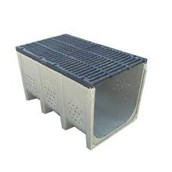
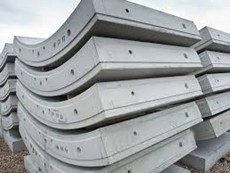
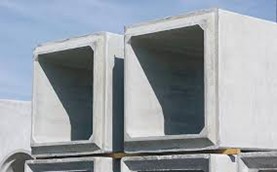
- Infrastructure elements (culverts, channels, pipes, manholes, etc.)
- Precast retaining walls and shear walls
- Precast staircases, balconies and cantilevered elements
In these applications, fiber reinforcement positively affects the behavior of the element both during production and throughout its service life.
Technical Benefits in Precast Concrete
- Crack Control and Reduced Crack Widths
In precast concrete elements, shrinkage, settlement and temperature variations can lead to cracking, which is a critical concern. Macro-48:
- Create a homogeneous three‑dimensional reinforcement network within the concrete mass
- Delay the onset of cracking
- Limit crack widths and help prevent crack propagation
Controlling crack widths contributes to:
- Extended service life of the element
- Preservation of surface quality and appearance
- Reduction of secondary damage mechanisms, such as reinforcement corrosion.
- Residual Load‑Carrying Capacity and Ductility
Macro fibers provide residual flexural strength, enabling the element to continue to carry load after cracking. As a result:
- Precast elements exhibit a more ductile failure behavior
- The risk of sudden, brittle failure is reduced
- Impact resistance during handling, storage and installation is improved
This provides a significant safety margin, especially in thin‑walled precast elements.
- Improved Impact and Abrasion Resistance
Throughout production, storage in the yard and transportation to site, precast elements are exposed to various impact loads. ConFib® macro fibers:
- Help distribute impact energy throughout the concrete mass via the fiber network, preventing crack localization
- Reduce edge chipping, corner spalling and surface damage
These properties are particularly critical for precast parking decks, industrial‑type precast panels and infrastructure elements.
- Elimination of Corrosion Risk
In systems using steel mesh or steel fibers, there is an inherent corrosion risk over time due to:
- Water and chlorides penetrating through cracks
- Insufficient concrete cover
- Harsh environmental conditions
Being fully synthetic, Macro-48:
- Do not corrode
- Introduce no additional corrosion source into the concrete
- Help extend the service life of precast elements, especially in outdoor and aggressive environments
This is a major advantage for coastal structures, chemically exposed facilities and infrastructure works.
- Flexibility and Speed in Production
Macro fiber reinforced precast concrete allows for more flexibility in formwork and reinforcement layouts:
- The need for installing, cutting and tying steel mesh is reduced or eliminated
- Formwork preparation time is shortened
- Concrete casting schedules become more flexible
This can increase the end‑of‑line capacity, raise daily production output and improve overall plant productivity. A major competitive advantage for high‑volume precast producers.
Properties Imparted to Concrete
The main properties that Macro-48 impart to precast concrete can be summarized as follows:
- Enhanced crack control capability
- Reduction in plastic and drying shrinkage cracking
- Smoother surfaces and improved aesthetics
- Increased ductility and energy absorption capacity
- Higher resistance to impact and vibration
- More controlled damage behavior under shock and overload conditions
- Improved service performance and durability
- Minimized corrosion‑related issues
- Reduced need for repairs and maintenance
- Extended service life
- Homogeneous reinforcement distribution
- A more uniform level of crack control throughout the cross‑section
- More balanced performance without requiring localized congestion of conventional reinforcement
- Fire and high‑temperature performance (to be assessed project‑by‑project)
- When properly designed and tested, fibers can contribute to maintaining crack control and element integrity under fire scenarios.
Cost Advantage and Economic Assessment
One of the key reasons for adopting macro fiber systems is the overall cost advantage they can deliver when properly designed. The use of Macro-48 offers the following economic benefits:
- Reduction in Reinforcement Costs
- Partial or full replacement of steel mesh and/or steel fibers is possible.
- Labor, cutting, bending and storage costs associated with conventional reinforcement are reduced.
This can provide a significant direct cost saving, especially in complex or thin‑walled precast elements.
- Savings in Labor and Time
- Time for placing and tying reinforcement is reduced
- Formwork opening/closing and preparation cycles are shortened
- Concrete casting operations become faster and easier to plan
Shorter production cycles enable precast plants to increase daily/weekly output, thereby reducing overheads per unit element.
- Reduced Losses During Transport and Installation
Macro fiber reinforced elements:
- Better resist impacts and vibration during transportation
- Better accommodate local stresses during loading/unloading
- Are more tolerant of unplanned stress concentrations during site installation
As a result, the proportion of cracked, damaged or rejected elements is reduced, cutting back on replacement, re‑production and site repair costs.
- Lower Life‑Cycle Cost Through Extended Service Life
Because precast elements:
- Exhibit fewer and narrower cracks
- Experience fewer corrosion‑related issues
- Suffer less surface deterioration and reduced joint repair needs
end‑users and asset owners benefit from lower long‑term maintenance costs. Consequently, beyond the initial investment, the total life‑cycle cost of the structure is reduced.
Key Considerations for Design and Application
When designing precast concrete with Macro-48:
- Fiber dosage should be determined considering the targeted residual flexural strength, element thickness and loading conditions.
- Where necessary, performance should be verified by flexural/tensile testing in accordance with relevant standards.
- Mix design should be optimized for the selected fiber dosage and required workability, including water/cement ratio and admixture types and dosages.
- Appropriate mixer type, mixing time and feeding sequence should be established to ensure homogeneous dispersion of fibers in the concrete.
ConFib®’s technical documentation and field engineering support can assist in selecting the right fiber type and dosage for project‑specific requirements.
Conclusion
ConFib®’s Macro-48 macro fibers provide the precast concrete industry with innovative solutions that deliver:
- Enhanced crack control and ductility
- Increased impact resistance and durability
- Reduced corrosion risk
- Improved speed, flexibility and efficiency in production
- Clear cost advantages in the medium and long term
With proper design and application, these macro fibers enable precast manufacturers and end‑users to produce structural elements that are more reliable, economical and long‑lasting.